How to keep your dog's health records organized (and what to track)

Keep your dog's records in one place, divided by type: vaccinations, microchip details, medications and parasite prevention, vet visit notes, weight, a symptoms log, insurance, and your dog's care team contacts, plus a one-page sheet for a pet sitter. A notebook or a simple folder works. What matters is that you can find any record in a minute when a vet, a shelter, or a sitter asks for it.
Why keep your own records if your vet already has them?
Your vet keeps a running history of your dog, including preventive care such as vaccinations, heartworm test results and preventive medications, deworming, and your dog's weight, along with reactions to medications, illnesses, and surgical procedures.
Your own copy is for the times that history isn't in the room with you: a first visit at a new clinic, an emergency at night, a trip, or a week with a sitter.
What should you track?
Give each record type its own page or section. Here's what goes on each one and when it comes in handy.
| Record | What to write down | Why it helps |
|---|---|---|
| Vaccinations | The date and which vaccine was given, with the paperwork from each visit. Rabies paperwork at the front. | Copies may be required at an emergency shelter. |
| Microchip | The chip number, the registry, and the date you last updated your contact details. | A scanned chip leads to a reunion only if the contact information is current. |
| Medications | Name, the dose and schedule your vet prescribed, start and end dates, what it's for, and any past reactions. | Some clinics ask you to bring a list of drug names and dosages. |
| Parasite prevention | Type of product, the date of each dose, when the next one is due, heartworm tests, and deworming. | You can see at a glance when the next dose is due. |
| Vet visits | Date, clinic, reason, what the vet found or recommended, new medication, and when to come back. | The details are on paper instead of in your memory. |
| Weight | Each reading with its date. | You see the numbers side by side instead of one at a time. |
| Symptoms | Date and time, what you saw, how long it lasted, and what changed around then. | Your vet will ask what you noticed and when it started. |
| Care team and insurance | Your vet, the nearest 24-hour emergency clinic, a poison control line, insurance details, and a backup person. | No searching for numbers when you're stressed. |
| Sitter sheet | Health issues, medications with times, diet, microchip details, and the phone numbers for your vet, the emergency clinic, and poison control. | Your sitter has it all on one page. |
Which vaccination records should you keep?
Keep the paperwork from every vaccine visit, with the date and which vaccine was given. Your vet sets the schedule, so you don't need to plan it yourself. Your part is keeping the proof together, with the rabies paperwork at the front of the section where you can find it quickly.
Put a copy in your emergency kit as well. Records showing your dog is up to date on vaccinations may be required at an emergency shelter. Our guide to packing an emergency go-bag for your dog covers what else goes in that bag.
If you're planning to travel with your dog, ask your vet well ahead of time which vaccination records you'll need. For local licensing rules, check with your city or county.
What microchip details should you write down?
Write down the microchip number and the registry it's listed with. The chip itself stores only an ID number of 9, 10, or 15 digits, and that number is registered in a database with your contact information. If you adopted your dog, the adoption agency or previous owner should give you the number.
Update the registry whenever you move or change phone numbers, and write the date in your records. A scanned chip leads to a reunion only if the contact information is current. If you're not sure which registry holds your dog's chip, ask your vet, or enter the number at PetMicrochipLookup.org, a tool that directs you to participating registries.
Add a current photo of you and your dog together. If you're separated during an emergency, a photo will help you document ownership and help others identify your dog.
How do you keep track of medications and parasite prevention?
For each medication, write down the name, the dose and schedule your vet prescribed, the start and end dates, and what it's for. Take the list to appointments. Some clinics, such as the University of Missouri's small animal internal medicine service, ask you to bring all medications, or at least a list of the drug names and dosages. A written list is easier than reading small labels in the exam room.
Give parasite prevention its own page. Note the type of product, the date of each dose, and when the next one is due, and add the dates of heartworm tests and deworming treatments there too.
If your dog has ever had a reaction to a medication, write it at the top of the medication page where you'll see it first.
What should you note after each vet visit?
After a visit, take two minutes to write down the date, the clinic, the reason for the visit, what the vet found or recommended, any new medication, and when to come back. If there were tests, ask for a copy of the results before you leave.
Here's an example of what one entry might look like (made up for illustration, not a real visit):
- Date and clinic: May 12, your regular clinic
- Reason: routine checkup
- What the vet found or recommended: in the vet's words, as close as you can get
- New medication: none, or the name, dose, and schedule as prescribed
- Next visit: the date the clinic gave you
- Tests: copy of results requested at the front desk
Give weight its own page. Copying each reading onto one page lets you see the numbers side by side. If you also weigh your dog at home, use the same scale each time and note the date.
Why keep a symptoms log?
When something seems off, write it down before the appointment. Your vet will ask what you noticed and when it started, and about any medication your dog has had in recent weeks and when the last doses were given. Photos (for example, of diarrhea) or videos of unusual behavior can be very helpful.
A short entry is enough: the date and time, what you saw, how long it lasted, and anything that changed around then, such as a new food. Before the visit, also think through how long problems have been going on, what medications or changes in diet have been tried, and whether earlier treatments helped.
Who belongs on your dog's care team contact page?
One page of phone numbers saves searching when you're stressed. Include:
- Your regular vet: clinic name, address, and phone number.
- The nearest 24-hour emergency clinic.
- An animal poison control line: ASPCA Animal Poison Control is (888) 426-4435. A consultation fee may apply.
- Insurance, if you have it: the company, policy number, and claims phone number. It belongs on the emergency contact card you leave for a sitter, too.
- A backup person: a neighbor, friend, or family member who lives nearby.
- Anyone else who cares for your dog, such as a groomer, trainer, or daycare.
What should a pet sitter's sheet include?
Build the sitter sheet from the pages above. Give your sitter your dog's age, weight, current health issues, medications, regular diet, and microchip information, plus the contact details for your regular vet, the nearest emergency clinic, and the poison control line.
List each medication with the dosage, when it should be given, and how often, and go over the list with your sitter in person if you can. Let your vet know when you'll be away and who is authorized to make decisions about your dog while you're gone.
Leave the emergency contact card in a highly visible spot, and text or email your sitter a current photo of your dog in case they get lost.
When will you need these records?
- At a new vet. Ask your current vet for copies of your dog's medical records to take to the new practice, so the new staff has your dog's history. Some clinics also ask you to bring copies of medical records, lab tests, and X-rays.
- When you travel. Check the official requirements for your destination and your airline, and ask your vet well before the trip which records to bring.
- In an emergency or evacuation. Take the copies from your emergency kit (see the list below).
- For boarding, daycare, or grooming. Ask the business which records it wants, and bring copies rather than originals.
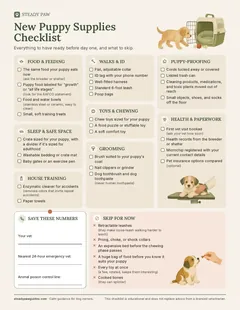
If you have a new puppy, ask the breeder or shelter for every health record they have and start with those, ideally before your puppy's first vet visit. Our list of what to buy before bringing home a puppy includes booking that visit.
How do you set up a simple system?
- Gather what you haveCollect vet receipts, vaccine papers, and any breeder or shelter paperwork. Ask your vet's office for copies of anything that's missing.
- Give each record its own sectionThe rows of the table above make good notebook sections or binder tabs.
- Put the people pages firstThe care team contacts and the sitter sheet go at the front, since those are what other people need first.
- Date every entryPut the newest one on top so the latest information is the first thing you see.
- Make a second copyKeep copies of your dog's registration information and other relevant documents in a waterproof container and available electronically. A phone photo of each vaccination record and the microchip page is a simple start.
- Update after every visitAdd the new details while they're fresh.
Sources
- AVMA, "Choosing a veterinarian" client brochure (PDF)
- Texas A&M College of Veterinary Medicine & Biomedical Sciences, Pet Talk "Take action now to prepare pets for evacuation"
- AAHA, Pet microchipping FAQs
- AVMA press release, Check the Chip Day
- FEMA, "Are you Petpared for Disasters?" fact sheet (2021)
- University of Missouri Veterinary Health Center, Small Animal Internal Medicine, Your appointment
- Royal Veterinary College, Preparing for the vet
- ASPCA Animal Poison Control
- AAHA, Preparing for the unexpected: essential pet sitter instructions
- ASPCA, Pet sitter safety: what to know before you go
This article is for general education only and is not a substitute for advice from your veterinarian.