What to buy before bringing home a puppy (and what to skip)
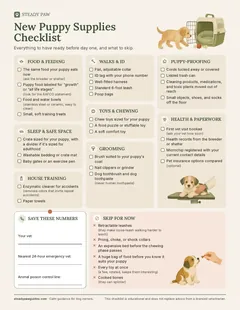
Before your puppy comes home, you need a short list of basics: the food they already eat, a safe place to rest, gear for walks and ID, supplies for accidents, a few toys, simple grooming tools, and a home that's been puppy-proofed. Most other things can wait until you know your puppy better, and a couple of common items on a new puppy shopping list are better skipped altogether.
What should be on your shopping list?
Have these ready before pickup.
What food should you have ready?
Start with the food your puppy eats now, and ask the breeder or shelter what that is. Some pets get an upset stomach when their food changes quickly. If you decide to switch, mix in the new food gradually over at least one week.
For the longer term, check the nutritional adequacy statement on the label. It says which life stage the food is made for, and the Association of American Feed Control Officials (AAFCO) recognizes four categories: growth, maintenance, gestation/lactation, and all life stages. For a growing puppy, look for "growth" or "all life stages."
If your puppy will grow into a large dog, check one more detail. The adequacy statement on a puppy food may also say whether the food is formulated for the growth of large-size dogs, which the label wording defines as 70 lb or more as an adult. If you're not sure how big your puppy will get, ask your vet which kind of food fits.
Where will your puppy sleep and rest?
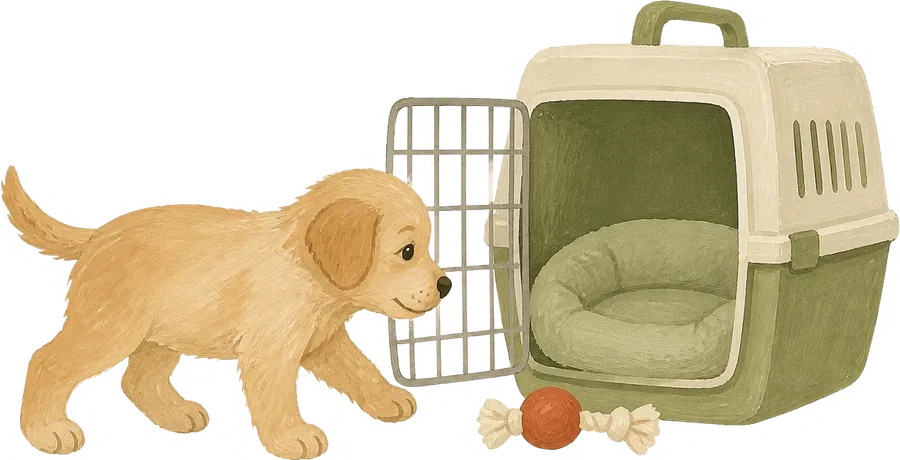
Set up one safe, comfortable spot for the times you can't watch your puppy: a crate, or for short periods a small, easy-to-clean room closed off with a child gate, with a bed, water, and things to chew on. A crate can also help with potty training, because dogs don't like to eliminate where they sleep.
Choose a crate that fits your puppy now. If you'd rather buy one sized for your dog's adult size, get one with a divider so you can adjust the space as your puppy grows. Washable bedding is enough to start, and baby gates or an exercise pen let you close off a room.
For where to put the crate on night one and how to set up the sleeping spot, see what to expect on your puppy's first night home.
What do you need for walks and ID?
Have the collar, ID tag, harness, leash, and poop bags ready before the first walk. If your puppy already has a microchip, make sure it's registered to you with your current contact details: a scanned chip leads back to the owner only if that contact information is current. Your vet can help you find the right registry, or you can use AAHA's Universal Pet Microchip Lookup tool.
An ID tag and an up-to-date chip are also part of being ready if a dog ever gets lost. Our guide on how to pack an emergency go-bag for your dog covers what else helps.
What helps with house training?
Expect some accidents while your puppy learns, and keep an enzymatic cleaner and paper towels within reach. Urine contains scent markers that tell a dog to go there again, and enzymatic cleaners break these markers down.
Clean up calmly, without punishing your puppy. Punishment could make a dog afraid to go in front of you.
Which toys and chews are worth buying?
Start with a few toys: chew toys sized for your puppy, a food puzzle or a toy you can stuff with food, and one soft comfort toy. You'll soon see what your puppy likes, and you can add more later.
Supervise your puppy with any chew toy or treat, especially one they haven't had before. If your dog "just isn't acting right" afterward, as an FDA veterinarian puts it, call your vet right away.
What grooming supplies do you need at first?
Get a brush that suits your puppy's coat, nail clippers or a grinder, and a toothbrush and toothpaste made for dogs. Skip human toothpaste: use only pet toothbrushes and toothpaste, because human toothpaste could upset your pet's stomach.
How do you puppy-proof before day one?
Go room by room before pickup.
- Get down lowLook around each room from your puppy's eye level.
- Tuck cords awayMove them out of reach or cover them.
- Use a trash can with a lidDogs can get into the kitchen trash and eat bones you've thrown away.
- Move hazards up highPut cleaning products, medications, and plants out of reach. ASPCA Poison Control has safety information on household products, human medications, and plants, including a list of toxic and non-toxic plants you can check against what's in your home.
- Clear the floorPick up small objects, shoes, and socks.
The First 90 Days handbook includes a room-by-room puppy-proofing section if you'd like to go further.
What paperwork and phone numbers should you sort out?
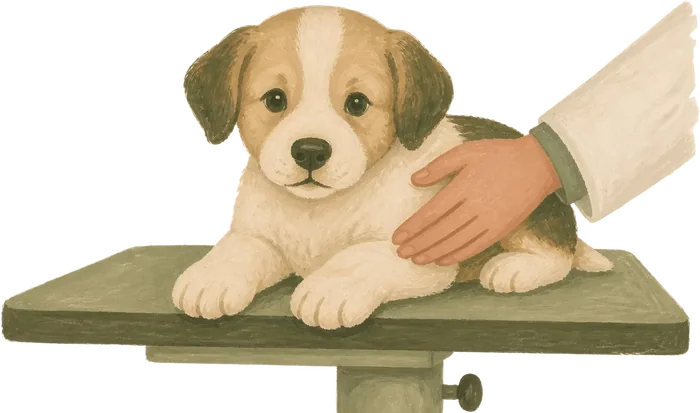
Book your puppy's first vet visit before pickup, and ask the clinic how soon they'd like to see a new puppy. Bring any health records from the breeder or shelter, and keep them together from day one; our guide on how to keep your dog's health records organized shows what to track. Pet insurance is optional, but if you're interested, you can compare options now.
Then save three phone numbers where everyone at home can find them.
If you think your puppy ate something toxic, call your vet, an emergency vet, or an animal poison control line right away. A consultation fee may apply. Outside the US, ask your vet which poison line to use.
What can you skip for now, and what for good?
| Item | Skip | Why |
|---|---|---|
| A big bag of a food your puppy hasn't tried | For now | Start small. An unusual degree of stomach upset during a switch can mean the change is going too fast, or that the new food isn't a good fit. |
| An expensive bed | For now | Washable bedding works while you see how your puppy treats it. |
| A basket full of toys | For now | A few are enough to start. |
| Bones, including leftovers from your meals | For good | Giving a dog a bone might lead to an unexpected vet visit or emergency surgery. Ask your vet which chews suit your puppy. |
| Prong, choke, and shock collars | For good | The AVSAB recommends only reward-based training and lists these collars among training tools that involve pain. |
Sources
- Tufts Petfoodology (Cummings School of Veterinary Medicine)
- Merck Veterinary Manual, Dog and Cat Foods
- Metro Nashville Animal Care and Control, Housetraining Tips (PDF)
- AVMA press release, Check the Chip Day
- FDA consumer update "No Bones About It" (republished on cabq.gov)
- Oklahoma State University, Veterinary Viewpoints (OSU Veterinary Medical Hospital faculty)
- ASPCA Poison Control
- AVSAB Position Statement on Humane Dog Training (2021, PDF)
This article is for general education only and is not a substitute for advice from your veterinarian.