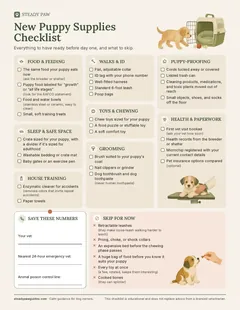
What to expect on your puppy's first night home (and what helps)

On your puppy's first night, expect some whining, and plan on a trip outside in the middle of the night. What helps most is a calm first day, a cozy crate or small pen close to your bed, and night potty trips that are quick and boring. Night one won't be perfect, and it doesn't need to be. It's the first step in a routine you'll build over the next few weeks.
Why is the first night hard for a puppy?
Give it a few days. Your puppy has just left everything familiar, and the first few days with a new dog can sometimes be overwhelming. For a new dog that barks and has a hard time settling, cut down on whatever is causing the stress, then wait it out. Time is sometimes the best remedy, and these behaviors should fade after several days of routine.
Expect your night to be broken, too. A puppy's bladder muscles aren't developed enough to hold urine as long as an adult dog can, and puppies can't be expected to "hold it" for extended periods, such as overnight. One trip outside in the dark is part of the plan, not a sign that something went wrong.
How can you make the first day calmer?
The night starts in the afternoon. Keep the first day quiet and close to home:
- Hold off on visitors. Wait to have family and friends meet your new dog until you've built a bond. Unfamiliar people wanting to say hello is often overwhelming for a newly adopted dog.
- Stay home if you can. Try not to leave a new dog home alone for the first 48 hours.
- Show your puppy the potty spot right away. Take them to the same spot every time, and plan potty breaks after eating and drinking, after naps, and after play.
- Keep the house small. Let your puppy explore one or two rooms rather than the whole house on day one.
In the evening, a short play session followed by a last trip outside right before bed gives your puppy a good chance to settle with an empty bladder.
Where should your puppy sleep the first night?
Close to you. Putting the crate in your bedroom or nearby in a hallway may be a good idea at first, especially with a puppy. Puppies often need to go outside during the night, and you'll want to hear your puppy when they whine to be let out.
This doesn't have to be permanent. Once your puppy sleeps comfortably through the night with the crate near you, you can begin to move it gradually to where you'd like it to be.
Should your puppy sleep in a crate or a pen?
Either can work, as long as the space is small. Keep your puppy in a small, confined area, such as a crate, a bathroom, or a puppy pen, and make it appealing with toys, food, and bedding. Your puppy comes to see it as a den, which they'll prefer not to soil.
Size matters more than type. Your puppy should be able to stand up and turn around freely in a crate. If you've bought a crate your puppy will grow into, block off the back so there isn't room for a separate toilet area, and if you use a pen, keep it small for the same reason. If you haven't picked a crate or bedding yet, our list of what to buy before bringing home a puppy covers both.
Whatever you choose, make it a good place to be. Going in should always be a positive experience, so never force your puppy into the crate, and never use it as punishment.
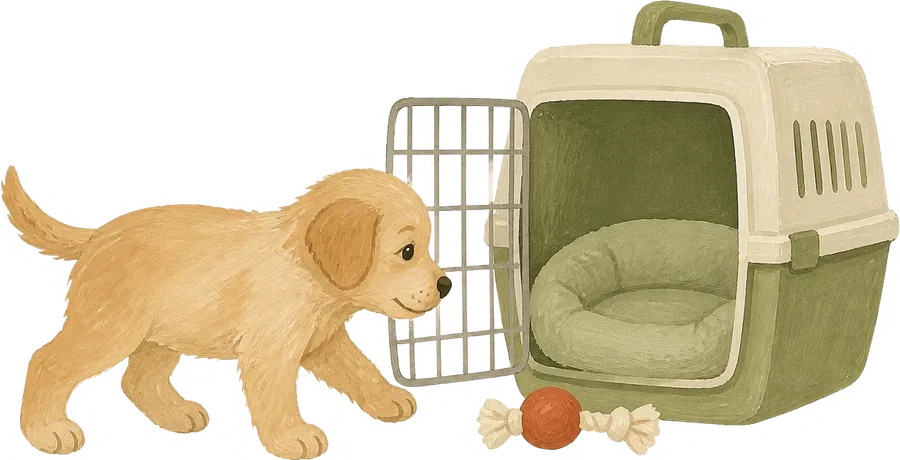
How do you set up the sleeping spot?
A towel or a bed inside the crate makes it comfortable. To create a safe space for a new dog, offer a covered crate with comfortable bedding. If sounds in the house or outside seem to bother your puppy, try relaxing music, the TV, or a white noise app. Keep the night kit by the door so a 2 a.m. trip takes seconds to start.
What should you do when your puppy cries at night?
Two pieces of advice apply at night. The first is to ignore whining or barking in the crate, with no positive or negative attention, and to open the door only when your puppy is quiet, never while they're whining or scratching. The City of Austin's crate training handout says the same for crate practice. The second is that young puppies need to go out at night. They can't be expected to "hold it" overnight, and keeping the crate close is how you hear your puppy whine to be let outside.
Neither handout says how to tell the two kinds of crying apart at night, so here is one way to handle it. If your puppy wakes and whines and could need the bathroom, treat it as a potty call: wait for a brief pause in the noise if you can, then take them straight out, calmly, and straight back afterward. If they've just been out, stay quiet in bed and give them a chance to settle. If you're unsure, ask your vet.
How do night potty trips work?
Keep them short and dull. Take your puppy to the same spot every time, and don't play with or excite them until they've gone. A night trip might look like this:
- Keep the lights lowLeash on, out the door, without chatting or play.
- Wait at the spotStand at the usual potty spot and wait quietly until your puppy goes.
- Praise softly while they goYou can also give a small treat at that moment. Rewarding with a tasty treat when they get it right helps your puppy learn to go outside.
- Go straight back to bedBack inside and into the crate, with as little fuss as possible.
How often you'll be up depends on your puppy. The number of hours a puppy can wait is strongly linked to their age. In the morning, go out first thing, since potty breaks should follow sleep.
If there's an accident, try not to be discouraged: accidents will happen and should be expected. Clean the spot thoroughly with an enzymatic cleaner to remove the smell that could draw your puppy back. A common reaction is to scold, but punishing your puppy is ineffective and may lead to more serious behavior problems, so simply clean up and carry on. If accidents keep happening in the crate, your puppy most likely just needs to go out more often.
What comes after the first night?
Night one is the start of a few busy weeks. Here's what they usually involve.
A daily routine. Offer meals, walks, and play at similar times each day.
Potty training. Plan on frequent breaks during the day. A UC Davis housetraining handout lists these by age:
| Puppy's age | Potty breaks a day |
|---|---|
| 6 to 14 weeks | 8 to 10 |
| 14 to 20 weeks | 6 to 8 |
The First 90 Days handbook includes a daily schedule worksheet and a potty training log for these weeks.
Crate training in the daytime. Build it up gradually: treats in the crate first, then meals, then the door closed for longer stretches. If your puppy whines consistently during these practice sessions, they're being closed in for too long, so go back to a length of time they handle well. How long it takes to learn varies from dog to dog.
Socialization. This is the process of getting your puppy comfortable with the people, animals, places, and activities that will be part of their life. It should begin during the puppy's sensitive period, between 3 and 14 weeks of age, using praise, play, and treats, at a pace that suits your puppy. AVSAB's position is that puppies should get socialization before they're fully vaccinated, exposed to new things as safely as possible. Until your puppy is fully vaccinated, keep them away from animals of unknown vaccination status and from places that may be contaminated, such as outdoor parks. Ask your vet how to plan this for your puppy, and start a folder for the vaccine paperwork from each visit. Our guide to keeping your dog's health records organized shows what else is worth tracking.
Sources
- City of Austin Animal Services, Crate Training handout (PDF)
- ASPCA, Tips for a New Dog
- UC Davis Clinical Animal Behavior Service, Housetraining Your Puppy (PDF handout written by veterinary students)
- UC Davis Clinical Animal Behavior Service, Crate Training Your Puppy (PDF handout written by veterinary students)
- AVMA, Puppy Socialization flyer (PDF)
- AVSAB, Puppy Socialization Position Statement (PDF)
This article is for general education only and is not a substitute for advice from your veterinarian.